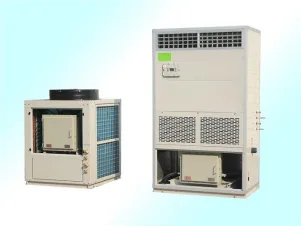
Explosion-Proof Air Conditioning: Safeguarding Hazardous Industrial Environments
In industries such as petroleum refining, chemical processing, metallurgy, and pharmaceutical manufacturing, the presence of flammable gases and combustible dust creates an ever-present risk. Standard air conditioning units pose a serious threat in these settings-an electrical spark or elevated surface temperature can serve as an ignition source, triggering catastrophic explosions. Explosion-proof air conditioners are engineered from the ground up to eliminate these ignition risks, making them an indispensable safety component in hazardous-area temperature control.
Guangdong Head-Power Air-Conditioning Co., Ltd. stands at the forefront of this specialized field. As a technology-driven enterprise with deep manufacturing expertise, Head-Power delivers certified explosion-proof HVAC solutions that industries count on for safe, reliable environmental control.
Company Strength: Certification and Engineering Capability
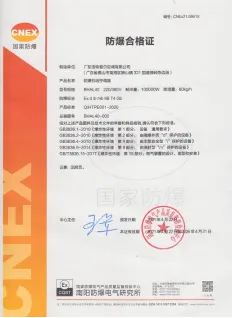
With over two decades of industry experience, Guangdong Head-Power Air-Conditioning Co., Ltd. is a nationally recognized high-tech enterprise committed to advancing air conditioning and heat pump technologies. The company holds ISO 9001 quality management certification, ISO 14001 environmental management certification, and ISO 45001 occupational health and safety certification. It also possesses the national Refrigeration Product Production License and official Explosion-Proof Product Certification-clear indicators of rigorous quality management and safety compliance.
On the innovation front, Head-Power has secured seven national invention patents alongside dozens of utility model patents, underscoring its deep engineering capabilities and commitment to advancing explosion-proof cooling technology.
The Engineering Behind Explosion-Proof Design
The distinction between a standard air conditioner and a genuine explosion-proof unit lies in the principle of inherent safety. An explosion-proof AC is not merely a conventional unit wrapped in a heavy steel enclosure-it is a system engineered with comprehensive safety measures at every level.
Head-Power explosion-proof air conditioners employ a combination of flameproof (Ex d), intrinsically safe (Ex i), and encapsulated (Ex m) protection methods. All control circuits utilize intrinsically safe design, eliminating the possibility of electrical spark generation during normal operation and fault conditions alike. Critical components-including compressors and circuit boards-undergo specialized anti-explosion treatment. Circuit boards, for instance, are potted with insulating compounds that isolate them from oxygen, preventing short-circuit ignition at the source.
Material selection is equally deliberate. External housings are fabricated from corrosion-resistant aluminum alloy or 304 stainless steel, with internal flameproof enclosures forming a secondary protective barrier. The aluminum alloy incorporates a honeycomb-structured mesh that subdivides the interior into countless micro-chambers. This structure delivers exceptional thermal conductivity per unit volume, rapidly absorbing the majority of heat released from any internal combustion event. As a result, post-reaction temperatures drop dramatically, gas expansion is substantially curtailed, and dangerous pressure buildup within the vessel is prevented. Even in the unlikely event of an internal fault explosion, this dual-layer architecture confines shockwaves and extreme temperatures within the enclosure, shielding the external hazardous atmosphere from exposure.
Performance: High Efficiency Meets Intelligent Control
Head-Power explosion-proof air conditioners are built around high-efficiency multi-fin heat exchangers. The enhanced surface area maximizes refrigerant-to-air contact, significantly boosting both cooling and heating performance-even under harsh operating conditions. The product line spans a comprehensive range of models to accommodate diverse spatial requirements.
Modern explosion-proof AC systems are evolving toward intelligent, IoT-enabled operation. Select high-end models feature built-in self-diagnostic capabilities that automatically detect filter clogging, refrigerant leaks, and other anomalies, pushing maintenance alerts through cloud-based platforms to reduce manual inspection frequency. Some units are equipped with DC inverter technology, achieving up to 20% energy savings compared to conventional explosion-proof air conditioners. For a typical 5-horsepower unit, that translates to roughly 4,000 kWh in annual electricity savings.
Operational flexibility is another hallmark-units support both manual and remote control. Low-noise engineering, combined with energy-efficient performance and user-centric design, ensures practical utility without compromising on comfort.
Applications Across Hazardous Industries
Head-Power explosion-proof air conditioners serve a broad cross-section of industries where explosive gas atmospheres are classified as Zone 1 or Zone 2 hazardous areas, including:
Petroleum and petrochemical processing - In reactor buildings and solvent storage areas where volatile compounds such as benzene and hydrogen are present, explosion-proof air conditioning is a mandatory safety provision. Standard AC motor sparks could ignite these atmospheres with devastating consequences.
Pharmaceutical manufacturing - From ethanol extraction workshops to biological laboratory alcohol storage rooms, environments requiring low-temperature maintenance without natural ventilation rely on explosion-proof cooling as the only safe option.
Metallurgy and chemical processing - Both sectors demand explosion-proof temperature regulation for safe, continuous operations.
Offshore oil platforms and containerized electrical control rooms - As technology progresses, explosion-proof HVAC applications have extended to these high-risk offshore and modular installations.
New energy and fine chemical sectors - Emerging industries dealing with volatile substances increasingly adopt explosion-proof climate control as standard practice.
Combustible dust environments - In grain processing facilities handling starch dust or metal polishing workshops generating aluminum and magnesium powder, dust concentrations as low as 40 g/m³ can produce destructive explosions upon contact with an ignition source. Dust-protected explosion-proof AC designs substantially mitigate this class of risk.
Selection Guide: Choosing the Right Explosion-Proof Air Conditioner
Selecting the appropriate explosion-proof unit requires careful evaluation across multiple dimensions-it is never as simple as choosing the most expensive model.
Cooling capacity and space requirements come first. A fuel station's tank area may need a compact wall-mounted unit with 3.5 kW of cooling capacity, while a large chemical synthesis workshop could require a floor-standing unit delivering up to 45 kW.
Hazard classification is equally critical. Different industrial environments carry different risk levels, which dictate whether IIB or IIC explosion protection is required, along with the appropriate temperature class (T1 through T5). Standard explosion-proof air conditioners typically cover up to IIB-rated locations (fuel stations, paint warehouses), whereas IIC environments-involving highly hazardous gases like hydrogen and acetylene-demand a higher protection tier.
Installation conditions also influence selection. For explosion-proof window-type units, placement away from doors and windows is recommended; mounting on windowsills improves stability and reduces noise transmission. Indoor sections require clearances exceeding 50 cm from left, right, and upper walls, with an unobstructed airflow path within 50 cm of the air outlet. An installation height around 80 cm is generally advised.
Environmental corrosion factors may necessitate customization. Seaside salt-production facilities, for example, often require 316 stainless steel chassis construction with anti-corrosion coated evaporator coils. Pharmaceutical cleanrooms demanding constant temperature, constant humidity, and particulate control call for units equipped with HEPA-grade filtration and precision humidity sensors.
In petroleum reactor buildings, underground mine storage facilities, and pharmaceutical hazardous-material warehouses, explosion-proof air conditioners serve as silent sentinels-their critical importance cannot be overstated.
A Commitment to Safety and Innovation
As national safety production standards continue to tighten, explosion-proof air conditioning has evolved from an optional upgrade into a mandatory investment for hazardous industries. Guangdong Head-Power Air-Conditioning Co., Ltd. remains guided by its founding philosophy: "Innovation-driven technology, intelligent manufacturing for the future." With efficiency, energy conservation, and environmental responsibility at the core, the company pursues continuous technological advancement to build robust temperature-management safety lines for the world's highest-risk industrial environments.
For inquiries regarding explosion-proof air conditioning solutions, certifications, or custom engineering requirements, contact Guangdong Head-Power Air-Conditioning Co., Ltd. today.