

When I first started working in the data center infrastructure space almost a decade ago, I’d hear engineers throw around terms like “modular UPS” and “precision AC” like they were common house words. Back then, I’ll admit, I didn’t fully get how these two pieces fit together—until I saw a server room crash because of bad cooling and a power unit that couldn’t keep up with the load. That’s when it clicked for me: modular UPS Room Precision AC isn’t just a pair of separate products; it’s an integrated system that keeps critical spaces running when every second of downtime costs real money. As someone who’s spent the last 7 years as a supplier of these exact solutions, I’ve seen firsthand how this technology solves problems that old, one-size-fits-all systems can’t touch. Let me break down what it actually is, why it matters, and how it’s changed the game for data centers, telecom sites, and all kinds of critical facilities.
First, let’s unpick the parts. A modular UPS (Uninterruptible Power Supply) is a power system made up of individual, plug-and-play units (modules) that you can add or remove as your power needs grow. Unlike traditional UPS systems that are a single, big block, modular designs let you scale capacity bit by bit, which saves space and cuts waste. Room Precision AC, on the other hand, isn’t your average home air conditioner. It’s built to maintain strict, stable temperature and humidity levels in enclosed spaces that hold sensitive equipment—think server rooms, telecom cabinets, or archive rooms. When you combine these two into a single integrated system, that’s modular UPS Room Precision AC: a cohesive power and cooling solution designed for spaces where every environmental and power variable needs to be controlled to the exact specification.
What makes this different from just buying a regular UPS and a regular AC and plugging them both into a wall? The integration is key. These systems are engineered to communicate with each other. The UPS monitors power load and the AC monitors room environment—if the power load spikes, the system can adjust cooling to match the heat that extra power generates. If the humidity drops too low, the AC kicks in humidification without needing a separate control unit. For facilities managers, that means one dashboard to watch both power and cooling, not two separate screens. That’s a huge win for small teams that don’t have time to troubleshoot multiple systems at once.
Let’s talk about why modular design is such a big deal, because that’s the core of this technology. Say you’re a startup building your first server room. You start with 5 racks, so you need a UPS that handles 10kVA and an AC that moves 5 tons of air. But next year, you add 5 more racks. With a traditional system, you’d have to replace your entire UPS with a 20kVA unit and maybe upgrade your AC too—wasting the cost of the old equipment, plus all the labor to swap it out. With modular UPS Room Precision AC, you just plug in two more UPS modules (each 5kVA) and add a bit more cooling capacity. It’s like adding a tile to a mosaic instead of redoing the whole thing. That scalability is a game-changer for businesses that grow incrementally, or for facilities with fluctuating loads—like a telecom base station that has higher power use during peak hours.

I’ve had customers come to me after a bad experience with a traditional system. One was a mid-sized e-commerce company that had a server room crash during a Black Friday sale. Their old UPS was a single unit that failed when a power grid blip hit, and their AC was a standard split system that couldn’t keep up with the extra heat from all the servers running at full tilt. They lost 4 hours of sales—over $2 million, they told me. When we installed a modular UPS Room Precision AC system, one of the first things they noticed was that the cooling stayed consistent even when the UPS adjusted to power spikes. The modular setup meant they could add more power modules as their sales grew, without the massive upfront cost of a big traditional system.
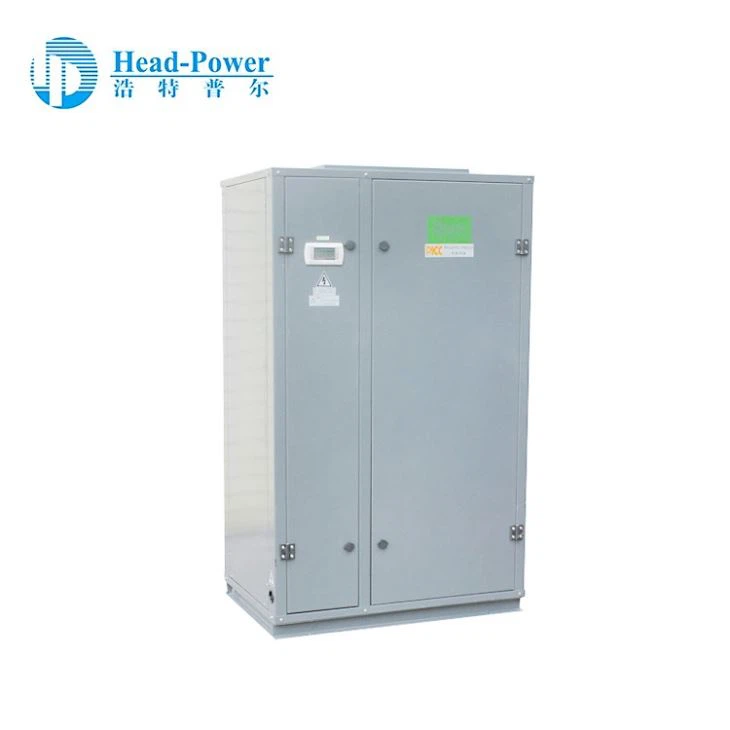
Now, let’s get specific about use cases, because not every modular UPS Room Precision AC system is the same. For small server rooms, you might need a compact, efficient unit that fits in a standard data center closet. That’s where solutions like the Computer Room Precision Air Conditioner come in—built for tight spaces, with precise temperature control down to ±1°C and humidity within 45-55% RH, which is critical for preventing server overheating or static damage. For larger data centers with higher cooling demands, you’ll find modular systems that pair with higher-capacity precision AC units, like the 5ton Precision Air Conditioner for medium-sized spaces, or the Server equipment room Precision Air Conditioner for heavy-duty, high-heat environments.
Telecom sites are another big user. Telecom cabinets and base stations are often in remote locations, where power can be unreliable and space is at a premium. A modular UPS Room Precision AC system here needs to be rugged, weather-resistant, and able to operate in extreme temperatures—from -40°C to 55°C in some cases. The Telecom Cabinet Precision Air Conditioner is designed exactly for this: it’s compact, can be mounted outside, and integrates with a modular UPS to keep communication gear running even during a grid outage. I remember a customer in a rural part of our country that had multiple cell towers go down during a winter storm because their old, non-modular UPS and AC failed in the cold. After installing our modular systems, only one tower had a minor blip— the rest stayed online, because the modules could operate in low temps and the AC adjusted to the cold outdoor air without wasting energy heating the space unnecessarily.
Archive rooms, another often-overlooked critical space, also rely on these systems. If you have physical records, media, or sensitive equipment that needs to be stored in a stable environment, a standard AC won’t cut it. Base Station Archive Room Dehumidifier is a specific type of precision AC that’s built for archive spaces, controlling humidity to prevent mold, mildew, and paper degradation. When paired with a modular UPS, you get a system that keeps your documents or media safe around the clock, even if power is interrupted briefly.
One of the biggest advantages of modular systems is uptime. Because the UPS is made of individual modules, if one module fails, the others can keep running—no need to shut down the whole system for repairs. A technician can swap a faulty module in 10 minutes without taking the facility offline. That’s a huge difference from traditional UPS systems, where a single component failure means a full shutdown for hours or days. The same goes for the precision AC: modular compressor units mean you can replace or repair a faulty part without turning off the cooling, which protects sensitive equipment from temperature spikes.
Energy efficiency is another key benefit, especially in an era where businesses are focused on reducing their carbon footprint. Modular UPS systems only use the power they need, not the full capacity of a big, underused unit. For example, if your UPS is only running at 50% load, it doesn’t waste energy spinning extra modules at half capacity. Precision AC systems are also designed with variable-speed compressors that adjust based on the room’s temperature, rather than running at full blast all the time. When you integrate the two, you eliminate the inefficiencies of separate systems that aren’t talking to each other. I’ve had customers see 20-30% lower energy bills after switching to modular UPS Room Precision AC—money that goes straight back into their business.
Maintenance is simpler too. With traditional systems, you have to schedule downtime to perform regular checks on the entire unit. Modular systems let you perform maintenance on individual components while the rest of the system stays online. For facilities teams, that means less disruption and lower long-term maintenance costs. A lot of our customers tell us that their maintenance time has dropped by half, because they only need to work on one module at a time, not the whole power and cooling setup.
Of course, like any technology, modular UPS Room Precision AC isn’t one-size-fits-all. You have to get the right balance of power and cooling capacity for your space. That’s why working with a supplier that understands different use cases is critical. A small office server room has different needs than a remote telecom base station, and a data center needs something different still. When I work with a new customer, I start by doing a full audit of their space: how many servers or pieces of equipment they have, their power load, the ambient temperature in the room, even local climate conditions. That’s how we recommend the right modular UPS and precision AC combination—whether that’s a compact system for a 10-rack server room, a rugged unit for a mountain-side telecom site, or a high-capacity system for a large data center.
I’ve seen a lot of bad decisions made when facilities managers cut corners on power and cooling. Cheap, old systems might work for a little while, but when they fail, the cost of downtime is way higher than the cost of a good modular system. I had a customer in the banking industry a few years ago who skipped upgrading their modular UPS Room Precision AC system during a server expansion. When they added 10 new servers, their old AC couldn’t keep up, and the UPS struggled to handle the extra power. It took out half their server room during a peak trading hour. The fix ended up costing 10 times what a planned upgrade would have cost. That’s why I always stress that this isn’t just an investment—it’s a necessity for any space where critical equipment runs 24/7.
Another thing that sets modular UPS Room Precision AC apart is its scalability for future growth. A lot of businesses start small, then grow faster than they planned. If you install a traditional system, you might outgrow it in 2-3 years and have to replace it entirely. With modular, you can add modules as you go, so your system grows with your business. That flexibility is invaluable for startups, growing companies, and even large enterprises that are expanding their facilities in phases.
Now, let’s talk about the technology behind the scenes to make sure it works. These integrated systems use advanced monitoring software that connects to cloud platforms, so facilities managers can check power and cooling levels from anywhere—their office, their home, or even on a mobile device. Alerts can be sent straight to your phone if there’s a problem: if a UPS module is running low on charge, or if the AC temperature spikes. That means you can address issues before they become failures, which is the whole point of proactive maintenance.
I’ve seen this firsthand with a customer that has a telecom network across a dozen rural sites. They used to have to send a technician out to each site every month for checks, which cost a fortune in travel time and labor. Now, with the cloud-based monitoring from their modular UPS Room Precision AC system, they can check all sites in 10 minutes, and only send a technician out when an alert pops up. That’s cut their maintenance costs by 40% and reduced downtime by 90%. It’s not just about the hardware—it’s about the software that ties it all together.
For anyone still on the fence, let’s break down the real-world benefits in plain terms: less downtime, lower energy bills, simpler maintenance, and the ability to grow without overspending. Whether you’re running a small computer room, a network of telecom base stations, or a large data center, modular UPS Room Precision AC is designed to keep your critical equipment running when you need it most. If you’re tired of dealing with old systems that fail at the worst possible time, or if you’re planning to expand your facility in the next few years, this is worth serious consideration.
At the end of the day, the goal of any power and cooling system is simple: to keep your business running without hassle. Modular UPS Room Precision AC delivers that by combining the reliability of integrated design with the flexibility of modular components. It’s not just a product—it’s a solution that’s built to adapt to your needs, no matter how they change. If you’re looking to upgrade your current power and cooling setup, or if you’re designing a new critical space, we’re here to help. We work with businesses of all sizes, from small startups to large corporations, to find the right system for their specific needs. Whether you need a compact unit for a server closet or a rugged system for a remote telecom site, we’ve got the expertise to guide you. Reach out to our team to discuss your requirements, and we can walk through the options that will keep your critical equipment running smoothly, efficiently, and reliably for years to come.
References:
- Data Center Dynamics. (2022). "Modular Power and Cooling: A Critical Component of Modern Data Centers." Retrieved from industry infrastructure reports
- Telecom Infrastructure Council. (2021). "Reliability Standards for Remote Telecom Site Power and Cooling." Retrieved from telecom industry guidelines
- ASHRAE. (2020). "Data Center Temperature and Humidity Guidelines." Retrieved from ASHRAE Technical Committee 9.9 publications
- U.S. Department of Energy. (2023). "Energy Efficiency Improvements in Modular Uninterruptible Power Supplies." Retrieved from energy efficiency technology reports
- National Archives and Records Administration. (2022). "Environmental Control Requirements for Permanent Records Storage." Retrieved from NARA facility standards