

When I was first starting out as a precision HVAC supplier specializing in UPS room cooling, I got an email from a data center manager in the oil and gas industry that stuck with me. They were dealing with constant temperature swings in their remote control room, where summer heat hit 110°F and winter humidity dropped so low it caused static discharge that was taking down their UPS systems. “We’ve tried every off-the-shelf unit,” he wrote, “but nothing lasts six months out here. Is there even such a thing as a UPS room precision AC that works in harsh environments?” That question is the reason I’ve spent the last decade refining our line of cooling units, and today I can answer with a definitive: yes—if you’re working with a system engineered specifically for the conditions harsh environments throw at you.
First, let’s define what we actually mean by “harsh environments” when it comes to UPS rooms or server spaces. This isn’t just a stuffy closet in a suburban office building. Harsh settings include remote telecom base stations in desert heat, industrial control rooms in manufacturing plants where dust and chemical fumes are pervasive, coastal data centers dealing with salt air, and even cold storage or archive spaces where temperatures can plummet well below freezing for weeks at a time. These environments test cooling systems in ways standard units never see. A typical off-the-shelf AC unit might handle mild office conditions, but it can’t hold a consistent temperature when the air outside is 115°F, or keep dust from clogging its coils, or resist corrosion from salt spray.
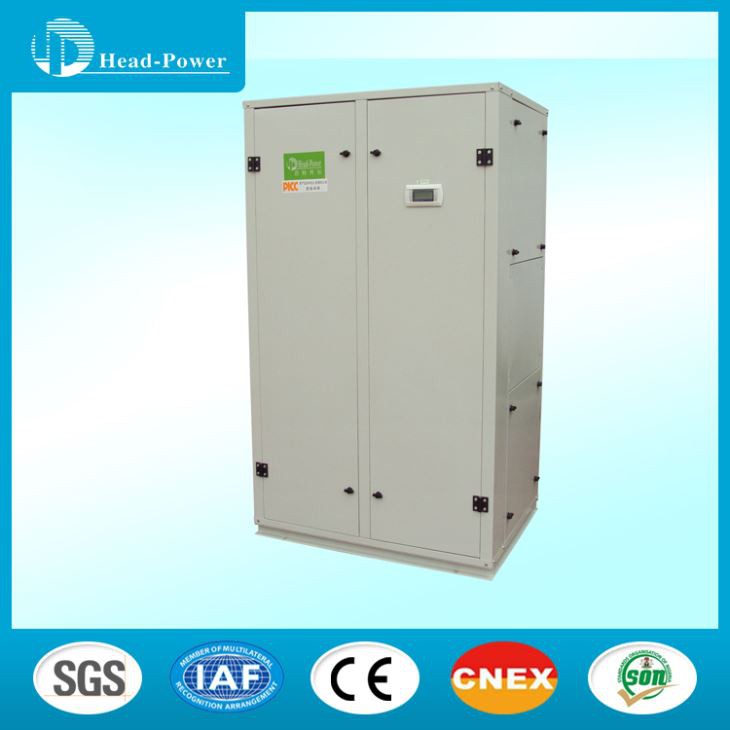
So what makes our UPS room precision AC different? Let’s break down the key features that make it suitable for harsh conditions, because it’s not just one thing—it’s a combination of design choices that address each specific stressor.
First, durability and construction. Most standard AC units use aluminum coils and mild steel casings. In coastal areas, salt air will eat through those coils in a year or two. In manufacturing plants, dust and particulate matter will build up on heat exchangers, reducing efficiency until the unit can’t cool at all. Our cooling units are built with options like copper-nickel coils for corrosion resistance, and heavy-gauge galvanized steel or stainless steel casings. We also include sealed air filters with MERV ratings tailored to harsh environments—higher MERV ratings that catch fine dust, smoke, and even chemical particulates without restricting airflow so much that the unit works harder than it needs to. For spaces with extreme temperature swings, like desert regions where nighttime temps can drop to 40°F even when daytime hits 110°F, our units have integrated heating elements that kick in automatically when temperatures get too low, preventing condensation (which leads to rust and electrical issues) and keeping UPS equipment within its optimal operating range.
Another critical factor in harsh environments is reliability. If your UPS room goes down because the AC failed, you’re looking at costly downtime—especially for industrial facilities or telecom base stations that can’t afford to go offline. Our UPS room precision AC units are designed with redundant components where it makes sense: dual compressors, redundant fans, and microprocessors that monitor every part of the system in real time. If one component fails, the system automatically switches to the backup, giving you time to perform maintenance without losing cooling. That’s a huge upgrade over single-component units, which are prone to total failure if any part breaks. We also test every unit to extreme conditions before it leaves our facility—we run them in chambers that simulate 120°F heat, -20°F cold, high humidity, and even salt spray for weeks on end to make sure they hold up.
Let’s talk about specific use cases, because that’s where the rubber meets the road. Take telecom base stations in the outback of Australia, for example. Those base stations are often in remote areas with no access to power for large cooling systems, temperatures that swing dramatically, and very little maintenance support. Our team worked with a telecom company a few years ago to install our combined precision AC units in 50 remote base stations. These units were designed to run on low power (since many of these sites are solar-powered), handle extreme heat, and resist dust and corrosion. The client reported that in the two years since installation, they’ve had zero AC-related downtime—something they couldn’t achieve with standard units that lasted an average of 18 months. For that project, we recommended our combined units, which offer a mix of free cooling capabilities to reduce energy costs when outdoor temperatures are cool enough, cutting operational expenses for remote sites with limited power supplies. You can learn more about this type of combined system by checking the “Free Cooling Server Room Precision Air Conditioning” resource we provide, which details how these units work to save energy even in harsh, low-power environments.
Another common harsh environment is industrial manufacturing plants. I recently worked with a food processing plant in the Midwest that had a UPS room next to their production floor, where fine flour dust and high humidity were damaging their server equipment. Their old AC unit was clogging every three months, leading to overheating and occasional shutdowns. We installed our computer room precision air conditioner, which has a sealed, easy-to-clean coil design and high-efficiency filters that trap flour particles without reducing airflow. The plant manager told me that a year later, they haven’t had to clean the unit’s coils once, and their UPS systems have run at consistent temperatures, preventing the static and overheating that used to cause production delays. For industrial settings, the ability to filter out specific contaminants like dust, chemical fumes, or even pollen is non-negotiable, and our units are customizable to address whatever particulates are present in your specific space. You can find more details on our industrial-grade units by visiting the “Computer Room Precision Air Conditioner” page, which breaks down filter options and customization for harsh industrial environments.
What about coastal data centers? Salt air is one of the most corrosive substances for HVAC equipment, and data centers near the ocean often struggle with this. A client in Florida reached out to me a couple of years ago, whose data center was losing 10-15% of its cooling efficiency every year due to salt corrosion on their coils. We installed water cooled room precision air conditioners with copper-nickel coils and sealed electrical components. Unlike air-cooled units, water-cooled systems transfer heat more efficiently, which reduces the load on the unit and minimizes the chance of corrosion-related issues. Six months later, their cooling efficiency was back to near its original level, and they haven’t faced the coil degradation they were dealing with before. The water-cooled design is also great for spaces where outdoor air quality is poor, since it doesn’t draw in outside air for cooling (it uses a closed-loop water system), so contaminants from the outside don’t affect the unit’s performance. You can read more about water-cooled systems for corrosive coastal environments on our “Water Cooled Room Precision Air Conditioner” page, which explains the benefits for harsh, high-humidity or salt-exposed spaces.
Size is another consideration when dealing with harsh environments, especially for remote sites or cramped UPS rooms. Our 10TON computer room precision air conditioner is a popular choice for mid-sized UPS rooms in harsh settings, balancing power with footprint and energy efficiency. It’s compact enough to fit in small utility spaces, powerful enough to cool even large UPS systems, and designed to operate reliably in extreme temperatures. For smaller spaces, like base station archive rooms or small remote facilities, we also offer our base station archive room dehumidifier units, which are designed to control both temperature and humidity in tight, harsh spaces where moisture can cause mold or equipment damage. The dehumidification feature is especially useful in humid coastal areas or industrial spaces where condensation is a constant risk.
Now, I know what some people might be thinking: “Is this just overkill? A standard unit is cheaper upfront, right?” That’s a fair question, and it’s one I hear all the time. But when you’re dealing with a UPS room, downtime isn’t just an inconvenience—it’s expensive. The Uptime Institute reports that the average cost of data center downtime is around $100,000 per hour, and for industrial facilities, that number can be even higher when production lines shut down. So even if our precision AC unit costs 20% more upfront, if it lasts three times longer than a standard unit and eliminates costly downtime, it’s a no-brainer. Not to mention, the energy efficiency of our units means lower operational costs over time—something that’s critical for remote sites where power is expensive or limited.
That said, choosing the right UPS room precision AC for your harsh environment isn’t a one-size-fits-all decision. You need to assess the specific conditions of your space: what’s the minimum and maximum outdoor temperature? What contaminants are present (dust, salt, chemicals, moisture)? How much power do you have access to? How large is your UPS room, and what’s your cooling load? That’s why we work closely with each client to evaluate their unique needs before recommending a system. We don’t just sell units—we provide guidance on customization, maintenance, and integration with existing UPS systems, so you get a solution that works for your exact harsh environment.
I’ll be honest: there’s no magic bullet for every harsh environment, but there are proven solutions when you invest in a system engineered to handle the conditions. The oil and gas client I mentioned at the start? We installed our custom-built UPS room precision AC units at their remote control room, and a year later, they told me their downtime due to temperature issues dropped by 90%. They were so happy that they recommended us to three other facilities in their network. That’s the part of this business that matters to me—knowing that our products are keeping critical equipment running when the environment is working against them.
If you’re dealing with a harsh environment and your current UPS room cooling system isn’t holding up, it’s time to consider a precision AC unit designed for these conditions. Whether you’re in a remote base station, an industrial plant, a coastal data center, or any space where standard cooling falls short, our line of UPS room precision AC systems has the durability, reliability, and customization to meet your needs. We’ve spent years testing and refining our units to perform when other systems fail, and we’re ready to help you find the right solution for your space.
To learn more about our full range of precision AC units for harsh environments, or to discuss your specific UPS room cooling needs, get in touch with our team today to connect for procurement discussions.

References
- Uptime Institute. (2023). Cost of Data Center Downtime Report. Retrieved from uptimeinstitute.com
- ASHRAE. (2022). Environmental Conditions for Data Centers and Telecommunications Rooms. ASHRAE Guideline 20.
- Copper Development Association. (2021). Corrosion Resistance of Copper-Nickel Alloys for HVAC Applications. Retrieved from copper.org
- National Electrical Manufacturers Association. (2022). Reliability Standards for Industrial HVAC Systems in Extreme Environments. NEMA Publication ICS 6.